
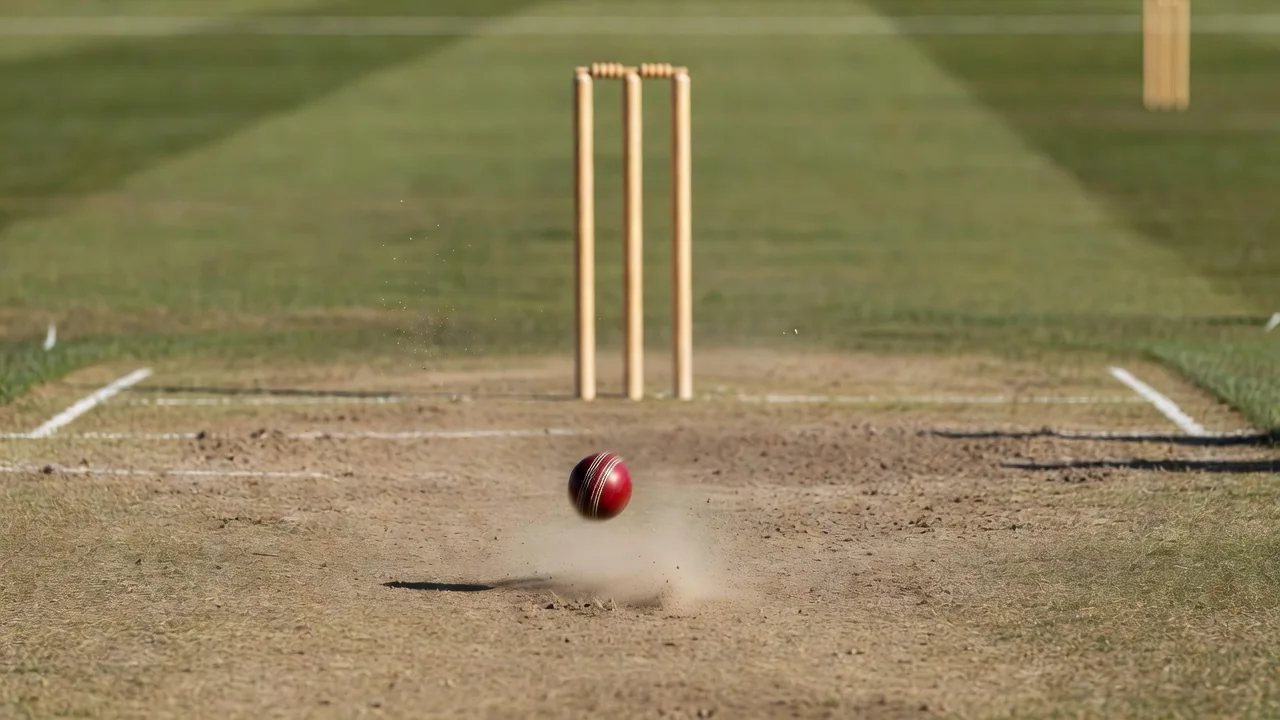
Live cricket betting — placing bets while the match is in progress — is where the sport's stop-start rhythm becomes an advantage. Every ball produces a new price, every over resets the puzzle, and the bettor who prepared before the first ball can exploit the crowd's reactions. This guide covers the in-play markets, the signals that move them, and the discipline that keeps you solvent in 2026.
The main in-play markets
Match odds move ball by ball, collapsing and rebuilding around wickets and boundaries. Innings runs lines update continuously, with the bookmaker's model projecting the total from the current state. Session and over markets — runs in the next over, wickets in the next five — settle fastest and carry the highest variance. Player markets persist in play too: a batter on 30 not out still has a live top-batsman price.
Most books also offer cash out, letting you settle a position mid-match at the current price. Cash out is a tool, not a strategy: use it to bank an edge that has been realised, not to soothe nerves.

Signals that move prices before the model catches up
In-play prices are model-driven, and models are slow on context. Your edge comes from information the model weights poorly.
- Dew arrival: once outfielders start towelling the ball, chasing conditions transform within minutes.
- Bowler rhythm: a quick who has lost his run-up leaks for an over before the model adjusts.
- Batter intent: a set batter who changes gloves or calls for a new bat is signalling a shift in gear.
- Field changes: a spreading field tells you the captain expects boundaries — or fears them.
- Pitch behaviour: a ball that grips or keeps low re-prices the rest of the innings instantly.
Session strategy: the professional approach
Break the match into blocks and bet blocks, not balls. In a T20, the natural blocks are the powerplay, the spin overs seven to fifteen, and the death. In an ODI, think in ten-over segments; in a Test, in sessions. Within each block you should know before it starts which outcomes you consider mispriced and at what line you will act.
| Block | Key question | Typical live edge |
|---|---|---|
| T20 powerplay | Did the new ball swing? | Unders after a quiet first over |
| T20 middle overs | Is spin gripping? | Wicket and dot-ball markets |
| T20 death | Who bowls 18 and 20? | Over lines vs part-timers |
| ODI 11–40 | Run rate vs wickets in hand | Total recalibration spots |
| Test sessions | Overheads and pitch age | Session runs lines |
The traps that kill in-play bankrolls
Speed is the trap. A six makes the crowd buy, a wicket makes them sell, and the bookmaker shades both reactions. Betting every over is the second trap: each bet carries margin, so volume without edge is guaranteed loss. The third trap is revenge staking after a lost position — the next over is not your recovery vehicle.
Set hard rules before the match: a maximum number of live bets, a fixed unit smaller than your pre-match unit, and a stop-loss for the day. If the stream lags behind the live data, you are betting blind against people watching faster pictures — check your delay before you trust your read.
Choosing where to bet live
Not all books price in-play cricket equally. The differences that matter are market variety (session and over lines versus bare match odds), suspension speed (how quickly the book closes markets after a boundary), and cash-out reliability during collapses. Test your book with small stakes in a low-profile match before trusting it in an IPL playoff.
Latency is the other differentiator. Some operators suspend markets aggressively, which protects you from betting into a wicket you have not seen; others leave lines open longer, which rewards fast hands but punishes slow streams. Neither is better in principle — the key is knowing which behaviour your book follows and matching your staking to it.
Finally, build a pre-match brief for every game you plan to bet live: expected par, key match-ups, dew forecast and the two or three prices at which you intend to act. In-play betting without a brief is just reacting to pictures, and the crowd always loses that game in the long run.
Build on the foundations
Live betting amplifies whatever you know about the underlying markets. Ground yourself in over-by-over betting and totals, and apply the framework in the IPL 2026 tips where in-play liquidity is deepest.